Tuesday, June 6, 2023

Pride in Indian Country: Why "Two Spirits?"

 Shiyo! Most of you have probably heard Native LGBTQ+ community members referred to by the term, “two spirit,” and you might have wondered where it came from. The phrase is a translation of an Anishinaabemowin term “niizh manidoowag,” meaning two spirits. Use of two spirit as a moniker for LGBTQ+ Indigenous people began in 1990 at the suggestion of Myra Laramee (Cree), “who proposed its use during the Third Annual Inter-tribal Native American, First Nations, Gay and Lesbian American Conference, held in Winnipeg.” The Indian Health Service describes Two-Spiritpeople in Native societies in this way: “Traditionally, Native American two-spirit people were male, female, and sometimes intersexed individuals who combined activities of both men and women with traits unique to their status as two-spirit people. In most tribes, they were considered neither men nor women; they occupied a distinct, alternative gender status.


Early French explorers noted the presence and acceptance of same-sex relationships among men in the Native societies they encountered and used the word “berdache,” meaning “an intimate male friend” to describe them. The English and Spanish, though, were less charitable, referring to these same men as “sodomites.” Walter Williams wrote, “Two-spirit people were respected by native societies not only due to religious attitudes, but also because of practical concerns. Because their gender roles involved a mixture of both masculine and feminine traits, two-spirit persons could do both the work of men and of women. They were often considered to be hard workers and artistically gifted, of great value to their extended families and community. Among some groups, such as the Navajo, a family was believed to be economically benefited by having a "nadleh" (literally translated as "one who is transformed") androgynous person as a relative. Two-spirit persons assisted their siblings' children and took care of elderly relatives, and often served as adoptive parents for homeless children.” There was no stigma in traditional indigenous communities—there was respect, honor, and love. This is an awesome video tutorial that does a great job of discussing and explaining the history of Two Spirits within Indian Country. Here is a beautiful photo essay on Two Spirit people from the Pine Ridge community in South Dakota from The Guardian by Magdalena Wosinska. 


The differences between the treatment of Two Spirit men and women by Indigenous and European societies is stark and illuminating. It’s also a reminder of the radical decency of traditional Indian Country ways of being and living. 


Thursday, June 1, 2023

Pride in Indian Country

 Shiyo, all! And Happy Pride Month! As I do each year, I will be posting materials on the month across Gadugi’s Facebook and Instagram pages as well as on our blog. Also as usual, sadly, I expect to receive pushback from folks who are normally supportive of the work but who want me to “stick to Indian issues.” It’s an amazing sentiment—as if there are not American Indians who also live and love within the LGBTQ+ communities. We call this overlap “intersectionality,” a once-obscure legal concept (like Critical Race Theory) developed by Black Feminist scholar Kimberle Crenshaw. Also like CRT, the theory of intersectionality has come under fire recently—when the state of Florida banned AP African American Studies, the state Board of Education took particular umbrage with and demanded the removal of selections from Dr. Crenshaw—along with bell hooks, Angela Davis, and others. So, the “stick to Indian issues” mantra is just one more form of erasure—a broken society telling our community “you can be Indian, you can be gay, but you can’t be both.” This does incredible damage to our LGBTQ+ relatives. 

 Although dependable numbers are difficult to come by, the most recent available statistics show that there are around 285,000 American Indian/Alaska Native adults who identify as LGBTQ+, or approximately 6% of all adult AIANs. A number of Indian communities have taken steps to protect and support this community through health and wellness programs, and you can find some powerful examples here. The assistance is deeply necessary, with many Indigenous LGBTQ+ reporting high rates of harassment, threats and violence. 35% of LGBTQ+ AIAN have been diagnosed with depression, and a heart-wrenching 56% of AIAN transgender youth report having attempted suicide. There are a number of resources available at the Indian Health Service site. There are also great resources here and here. Feel free to use these and, of course, to pass them along to anyone who may find them helpful. 


Native American LGBTQ+ people exist and deserve respect and love. Sadly, not all in Indian Country recognize or agree with this stance. Colonialism is a powerful thing that often pits us against our own cultures and traditions. This Pride Month, let’s fight colonialism, and simply do the right thing—by letting our LGBTQ+ brothers and sisters know that we love them, we are here for them, and we will fight for them. Happy Pride Month!


Friday, May 12, 2023

Congratulations, Derek!

 Congratulations to Derek Torres, a former Gadugi Scholar who graduates from Appalachian State University today with a degree in communications and creative writing!! Wonderful job, young man! Best wishes for an amazing future!!


App State Graduate Derek Torres

Monday, February 13, 2023

Charles George KIA Bracelets

 Friday was a special day for the Gadugi Partnership! We were honored to present each Cherokee High School ROTC student with a memorial Charles George KIA bracelet. Charles George was a citizen of the Eastern Band of Cherokee Indians who gave his life during the Korean War. George won the Medal of Honor for his bravery and sacrifice. We hoped to honor the commitment of the ROTC students and to, hopefully, inspire them by reminding them of their community's long history of service. #Gadugi #gobraves #CHSROTC


Wednesday, January 18, 2023

SAIM Program at Watauga County Public Library

 Hey Boonies with children--come to the Watauga County Public Library on February 8th at 11:00 am and join App State's Student American Indian Movement for a reading of Joseph Bruchac's retelling of the traditional Cherokee story "The First Strawberries!" The first 15 children get a FREE copy of the book to take home (one per family). S'gi, and hope to see you there!

Watauga County Public Library
2/8/23
11:00 am


Saturday, November 19, 2022

Friday, November 18, 2022

THIS DATE IN AMERICAN INDIAN HISTORY

 In 864, the Mayan dedicated the Great Ball Court at Chichen Itza.


Chichen Itza: pre-Colombian city built
by the Mayans.


Thursday, November 17, 2022

Indigenous Learning

 S'gi to Ms. Miranda Stamper of Cherokee Middle School for a fantastic presentation yesterday here at App! As part of our celebration of Native American Heritage Month, Ms. Stamper spoke to us about Indigenous ways of teaching and learning. It was a wonderful way for us to conclude our celebrations of the month! #gadugi #GoBraves #NativeAmericanHeritageMonth


Ms. Miranda Stamper speaks to ASU students 
and faculty on Wednesday


Monday, November 14, 2022

Who We Are

 Last week, we had the opportunity to educate campus through the “We Are Here” panel discussion series. The event went well, but there was part of it that I found discouraging and a little depressing. It seemed that so much of what we talked about was telling the people there what we are not as a community and people instead of positively asserting who and what we are. It reminded me of a quote from Cherokee Principal Chief John Ross. “Convince the world by your character,” he said, “that Indians are not as they have been shown.” That’s an unfair burden and expectation, but it is a reality for Native people. After 50 years of Hollywood stereotypes and erasure from the history books Native people—Native youth especially—confront so many ignorant tropes that we always begin with a deficit model in our conversations. Last Wednesday, we told those gathered that we are not all dark skinned. We are not all enrolled. We do not all come from cultures that use dreamcatchers. We do not all get to attend college for free. We are not all diversity admissions. And on and on.


But if we had the opportunity to tell campus who we are, what would you say? For me, I would let the world know that we are a community not merely of survivors, but of thrivers. We are a people with an extraordinary reserve of resilience, and a relentless people who for five centuries have resisted colonialism and attempted physical, cultural, and spiritual genocide. We are a community that cares for one another. We have a culture with much to teach the rest of the world about matrilineal cultures, consensus government, and being caretakers of the planet. That’s only a tiny piece of who we are, and we need to let campus—and the world—know. 


Take some time this week to consider how we may reframe this conversation from, as John Ross said, proving to the world what we are not, and instead proudly showing who we are. Who. We. Are. Together we can move the conversation in that direction. Our people and the world will be better for it. S’gi.

THIS DATE IN AMERICAN HISTORY

 In 1969, American Indian Movement activists first occupy Alcatraz Island.


Friday, November 11, 2022

Happy Veterans Day!

Did you know that American Indians serve in the United States military at 5 times the national average? Or that, since 9/11, nearly 19 percent of American Indians have served? Happy Veterans Day from the Gadugi Partnership and s'gi to you all for your service to this nation!!

Eastern Band of Cherokee Indians Medal of Honor recipient
Charles George statue in Veterans Park on the Qualla Boundary


Wednesday, November 9, 2022

THIS DATE IN AMERICAN INDIAN HISTORY

In 1871, the 2,854 square mile San Carlos Apache Indian Reservation is established. The reservation became the home of Apache, Mohave, and Yuma Indians.  


Monday, November 7, 2022

 I am SO excited about these events next week! It's International Education Week, and Gadugi has partnered with App State's Office of International Education and Development for two great programs! At 4 in the Student Union Ms. Miranda Stamper will be speaking about her work during the pandemic lockdown to emphasize traditional education and make sure that, even though schools were closed, education continued! Then at 6 in Greenbrier we will be showing the film "Another Word for Learning," which emphasizes decolonizing education. Please join us if you can!


THIS DATE IN NATIVE AMERICAN HISTORY

In 1811, the Battle of Tippecanoe is fought. Shawnee leader Tenskwatawa (The Prophet) and his followers took on General William Henry Harrison and his 1,000 soldiers near Prophetstown. The battle was a victory for the Americans who destroyed the town. The loss was the beginning of the end for the confederacy that Tenskwatawa and his brother, Tecumseh, had sought to establish. 


Tenskwatawa 
1775-1836


Sunday, November 6, 2022

THIS DATE IN NATIVE AMERICAN HISTORY

 In 1868, Red Cloud and his warriors signed the Treaty of Fort Laramie, ending what came to be called "Red Cloud's War." After several years of conflict and embarrassing defeats at the hands of the Indians, the US government sued for peace. 


Red Cloud
1822-1909

Saturday, November 5, 2022

THIS DATE IN NATIVE AMERICAN HISTORY

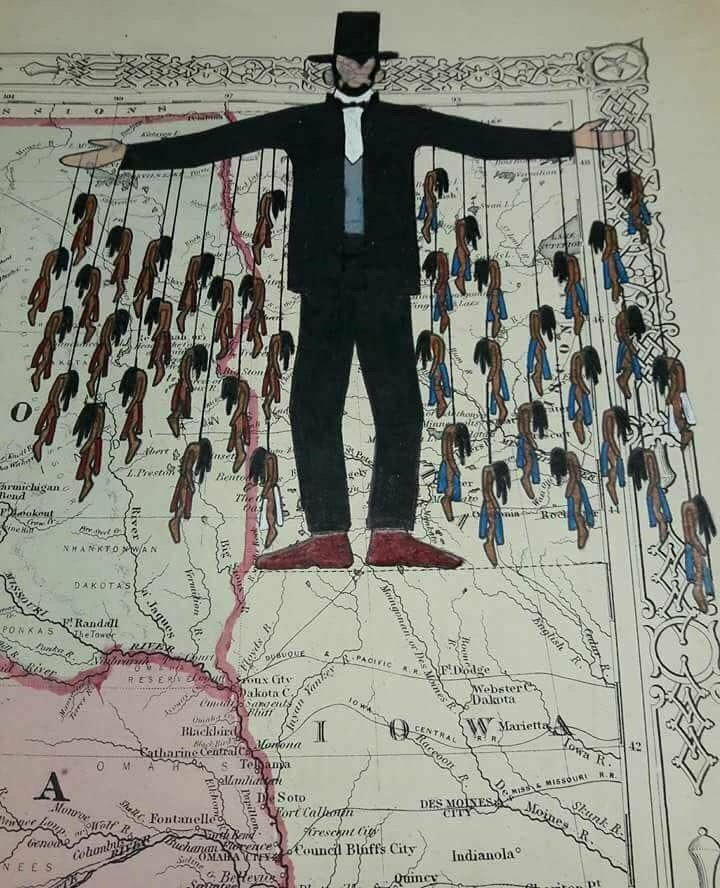
 In 1862, 303 Santee Sioux were sentenced to death by a military commission after a 37 day resistance to US treatment of the Sioux and the breaking of a treaty between the two nations. President Abraham Lincoln personally reviewed the convictions of all 303 and, finding many of the convictions corrupt, tossed out the majority. In the end, 38 Sioux were hanged the day after Christmas, 1862. These are now remembered as the Dakota 38


Abraham Lincoln & the 
Dakota 38

Friday, November 4, 2022

THIS DATE IN NATIVE AMERICAN HISTORY

 In 1879, the great Cherokee humorist Will Rogers was born in Indian Territory (present-day Oklahoma).


Will Rogers, Cherokee
1879-1935

Thursday, November 3, 2022

THIS DATE IN NATIVE AMERICAN HISTORY

 In 1892 former Cherokee Tribal Senator Ned Christie is murdered by a posse outside his home in Indian Territory. Christie had been on the run for over five years after being falsely accused of killing a US Marshal in 1887. #nativeamericanhistory


Ned Christie

Wednesday, November 2, 2022

New Youtube Channel

 Shiyo! The Gadugi Partnership's youtube page has a new name that's easier to remember and to find!! Find, subscribe, and follow us at YouTube.com/@appstategadugi!!

Sunday, October 30, 2022

Trick or Treaty

 Eight years ago, I was teaching at Cherokee High School on Columbus Day. That day, my students and I discussed the truth of Columbus and his bloody legacy. I reminded my students that my work at App State involved working with future history teachers. With that in mind, I asked them what would they want me to tell my students back in Booneabout them? What did they want future teachers to know about Indians? After a brief silence one student spoke up: just tell them we are human, she said.


I’ve never forgotten that answer—just tell them we are human. The answer betrays centuries of efforts at dehumanizing American Indians, Indian culture, language, values, and heritage. Each year at Halloween we are reminded of the impact of these dehumanization efforts. Amazon offers quite a few selections for “sexy Indian” costumes. Dollar General stores near Cherokee sell “Trail of Treats” costumes. Sacred feathers, religious regalia—all reduced to cheap dress-up outfits for white children and adults to “play Indian.” Native people and cultures are reduced to mascots and tropes. A lingerie company offers an entire line of “sexy Indian” attire, even in the face of Indian activists informing them that the outfits “sexualize us and dehumanize us, and in a very serious sense, they also can harm the community. They play into very harmful representations of us that lead to non-Natives committing assault towards Native women.” In the face of the tragedy of Missing and Murdered Indigenous Women this is not an academic argument but a literal matter of life and death for Indian women and girls. A 2016 Department of Justice survey found that “of over 2,000 women surveyed, 84 percent of Native American and Alaskan Native women have experienced violence, 56 percent have experienced sexual violence, and, of that second group, over 90 percent have experienced violence at the hands of a non-tribal member.” Native women are 2.5 times more likely to experience sexual assault and rape than any other ethnic group in the United States. Certainly Halloween costumes are not solely or even primarily to blame; but the callous and willful objectification and sexualization of Native women absolutely plays a role in this crisis. 


The Lakota Law Project calls Halloween “a reminder of the seemingly willful ignorance that remains in this country surrounding culturally appropriative and insensitive costumes.” There are real world consequences for this cultural appropriation and insensitivity—such as Native youth asking to simply be seen as human beings. Doing away with these ignorant, offensive and harmful “costumes” is not about being politically correct—it’s about being morally correct. If there are parties or gatherings on campus where these costumes are worn there should be accountability. These vile outfits are a form of violence against Indian people. If you see them and you feel safe doing so, call them out. If not, reach out to me or someone you trust on campus to confront the issue. There is no room in an educational institution for these expressions of colonialism. American Indians are not mascots or Halloween costumes. America needs to be reminded of this truth. Native youth deserve better.